
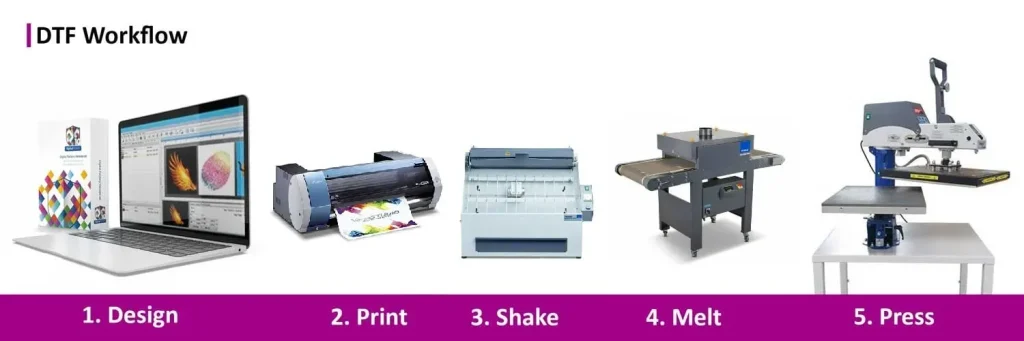
The **DTF transfer workflow** has become a game-changer in the world of custom apparel printing, providing an efficient and user-friendly approach to applying designs on various fabrics. This innovative method leverages the strengths of the DTF printing process, allowing for vibrant and durable custom DTF prints that cater to growing consumer demands. Understanding how to set up your DTF transfer workflow is crucial for any business looking to thrive, as it encompasses everything from selecting the right DTF printing supplies to perfecting the transfer setup. With the proper knowledge, you can streamline your operations, enabling both small and large-scale productions to achieve excellent results consistently. Dive into our comprehensive guide to master each step of the process, ensuring your designs make a lasting impression.
In the realm of fabric printing, the Direct-to-Film method has emerged as a preferred technique for many printing enthusiasts and businesses alike. Known for its simplicity and versatility, the DTF film transfer process allows users to create stunning graphics with ease while maintaining the integrity of the designs across a variety of materials. Setting up a successful transfer system is essential for ensuring high-quality outputs and maximizing production efficiency. By delving into the logistics and key elements required for an effective DTF transfer setup, one can learn to navigate the intricacies of this modern printing technology seamlessly. Whether you’re aiming for unique custom prints or streamlined production capabilities, understanding these components can significantly enhance your printing experience.
Essentials of DTF Printing Supplies
When embarking on your DTF transfer workflow, the significance of quality supplies cannot be overstated. Essential materials include high-quality DTF inks specifically formulated to deliver vibrant colors and exceptional durability. Investing in reliable DTF film is also critical, as it directly influences the print quality, ensuring that designs appear sharp and clear on the final garment. The use of hot-melt adhesive powder also plays a vital role, as it ensures a strong bond during the heat transfer process. Together, these components lay the foundation for successful custom DTF prints.
Moreover, sourcing your DTF printing supplies from reputable vendors can make a noticeable difference in the final product. Whether you need DTF films or specialty inks, ensure that your suppliers are known for consistency and quality, which will enhance productivity and customer satisfaction. As trends in custom apparel evolve, keeping an eye on new materials and techniques in the DTF printing supplies market can give your workflow an edge over competitors.
Step-by-Step Guide to DTF Transfer Process
The DTF transfer process is a straightforward yet meticulous series of steps requiring attention to detail. It starts with the careful printing of your design onto the DTF film using precise settings to match the film type and ink consistency. After printing, the application of hot-melt adhesive powder is crucial, as it aids in achieving a smooth transfer onto the fabric. This powder activates during the heat press stage and ensures that the ink adheres properly to the garment, resulting in a high-quality finished product.
Once the printing and adhesive stages are completed, the actual transfer of the design to the garment takes place. Utilizing a heat press at the right temperature for an adequate duration is essential to successfully bond the print without damaging either the film or the fabric. Each type of garment and ink may require specific adjustments, highlighting the importance of a well-managed DTF transfer setup that accommodates these variations to optimize outcomes.
Optimizing Your DTF Printing Process
Optimization of your DTF printing process can significantly enhance productivity and reduce waste. Regular maintenance of printers, including cleaning the print heads and ensuring proper ink flow, can prevent issues such as clogging and misalignment. Adjusting printer settings based on fabric type not only improves print quality but also maximizes the lifespan of your equipment. Integrating continuous feedback loops, such as regularly assessing final products for any color discrepancies or design flaws, will also guide necessary adjustments in real-time.
Additionally, experimenting with different fabrics in your DTF transfer workflow can yield insights into which materials work best for specific projects. By documenting the results of these experiments and refining your processes accordingly, you create a robust workflow tailored to your business’s unique demands. This continuous improvement mindset will keep you competitive in the ever-evolving landscape of custom DTF prints.
Challenges in DTF Transfer Setup
While DTF printing offers numerous advantages, navigating the challenges of DTF transfer setup is crucial for success. Common issues include ensuring that the adhesive powder is evenly applied, as inconsistent application can lead to part of the design peeling or fading after washing. Another challenge can arise in the heat application stage—applying too much pressure or heat can damage the garment, while too little may result in inadequate adhesion of the design.
To address these challenges, maintaining a well-structured workflow and meticulously calibrating equipment before beginning a project can drastically improve outcomes. Regular testing with various setups will help identify the most effective conditions for specific fabrics and designs, allowing you to fine-tune the process and mitigate potential problems that could compromise the final product’s quality.
Current Trends Influencing the DTF Printing Industry
As DTF printing continues to gain traction, several trends shape the industry’s direction. The increasing demand for custom apparel aligns with consumers’ desire for personalized products, pushing businesses to adopt DTF printing technologies that enable low-cost production of unique designs. Moreover, there’s a notable shift towards environmentally friendly practices, as many manufacturers are exploring water-based inks or sustainable sourcing for DTF supplies.
Staying updated with these trends is essential for businesses looking to maintain a competitive edge. By incorporating sustainable practices and innovative technologies into your DTF transfer workflow, you not only appeal to ecologically minded consumers but also position your brand as forward-thinking and adaptable to industry changes. Keeping tabs on advancements in DTF technology will not only enhance your processes but also foster customer loyalty.
Enhancing Quality Control in DTF Printing
Quality control stands as a pillar of the DTF printing process, ensuring that every batch meets established standards. Regular quality checks during the printing and transfer stages are crucial to identifying any potential flaws early. This can involve inspecting prints for color accuracy, vibrancy, and adherence to fabrics. By implementing a checklist or a standardized evaluation method, you can systematize quality assurance and maintain high output standards.
In addition, documenting quality control processes will provide a reference for troubleshooting and improvement. Should discrepancies arise, having a detailed record of past projects aids in identifying patterns and preventing recurrences of similar issues. As you iteratively refine your quality control measures, you bolster the reliability and reputation of your DTF printing business among customers seeking consistent and high-quality custom prints.
Frequently Asked Questions
What is the DTF transfer workflow and how does it work?
The DTF transfer workflow involves several key steps in the DTF printing process including designing, printing on DTF film, applying adhesive powder, and transferring the design onto fabrics using a heat press. This method allows for the application of vibrant custom prints on various materials.
What equipment is required to set up a DTF transfer workflow?
To set up a DTF transfer workflow, you’ll need a high-quality inkjet printer compatible with DTF inks, specialized DTF films, hot-melt adhesive powder, and a heat press. Ensuring that you have the right DTF printing supplies is crucial for successful output.
How do I prepare my designs for the DTF transfer setup?
For the DTF transfer setup, use professional design software to create your artwork. Make sure to set the correct dimensions, and resolution (300 DPI) and choose the right color profile to ensure that the custom DTF prints appear vibrant and correct on the final product.
What are the common troubleshooting tips for DTF film transfer?
Common troubleshooting tips for DTF film transfer include checking printer settings for optimal color alignment, ensuring the right amount of adhesive powder is applied, and performing regular maintenance on your printer to prevent clogs that could affect the printing process.
Can I use any type of fabric for custom DTF prints?
Yes, the DTF transfer workflow is versatile and works well on most fabric types including cotton, polyester, and blends. However, it is crucial to test various settings and temperatures when transferring designs to ensure the best results on specific materials.
What are the advantages of using the DTF printing process over other methods?
The DTF printing process offers several advantages such as vibrant color reproduction, flexibility in printing on various substrates, and the ability to produce high-quality custom DTF prints in small or large batches cost-effectively. Additionally, it requires less setup time compared to traditional screen printing.
| Step | Description |
|---|---|
| 1. Equipment and Supplies | Invest in a high-quality inkjet printer, DTF films, durable inks, and adhesive powder for effective transfers. |
| 2. Design Process | Use professional design software, maintain correct dimensions and DPI for optimal design clarity. |
| 3. Printing Process | Print directly onto DTF film using precise printer settings, followed by applying adhesive powder before curing. |
| 4. Transfer Process | Use a heat press to apply the printed design onto the garment at the appropriate temperature and time. |
| 5. Post-Processing | Inspect the finished product for quality, and consider additional heat pressing for enhanced durability. |
| 6. Troubleshooting and Optimization | Regular maintenance and testing with various fabrics ensure consistent quality and avoid common printing issues. |
Summary
The DTF transfer workflow is a comprehensive process that streamlines the printing of custom designs on apparel. By understanding each step—from selecting the right equipment and mastering the design process, to executing a successful print transfer and conducting quality checks—you can enhance your production efficiency and product quality. Embracing the innovations in DTF printing not only allows for versatility in design applications but also supports sustainable printing practices that are increasingly crucial in today’s market. Ensure that you continually optimize each phase of your DTF transfer workflow to remain competitive and meet customer demands effectively.